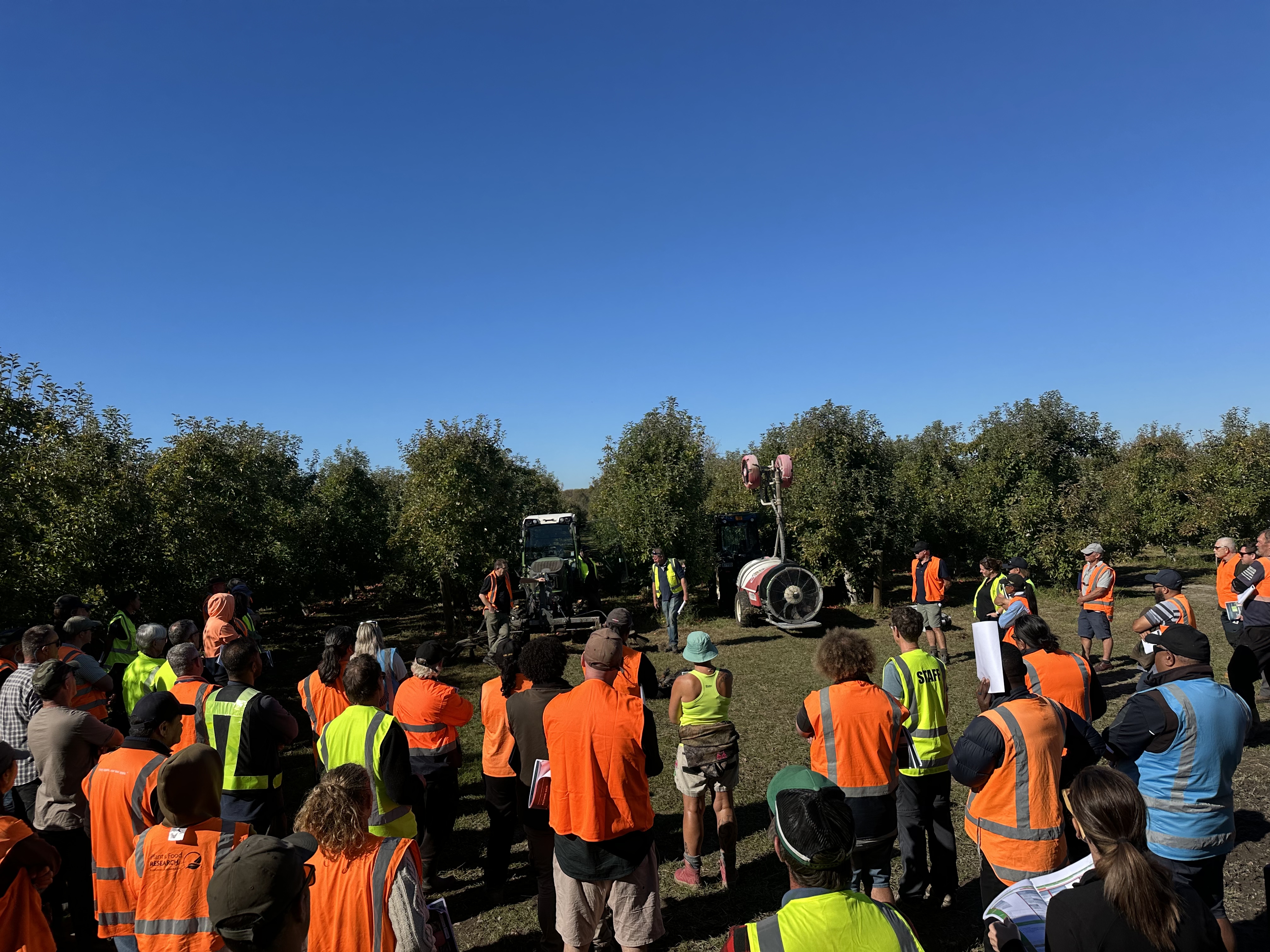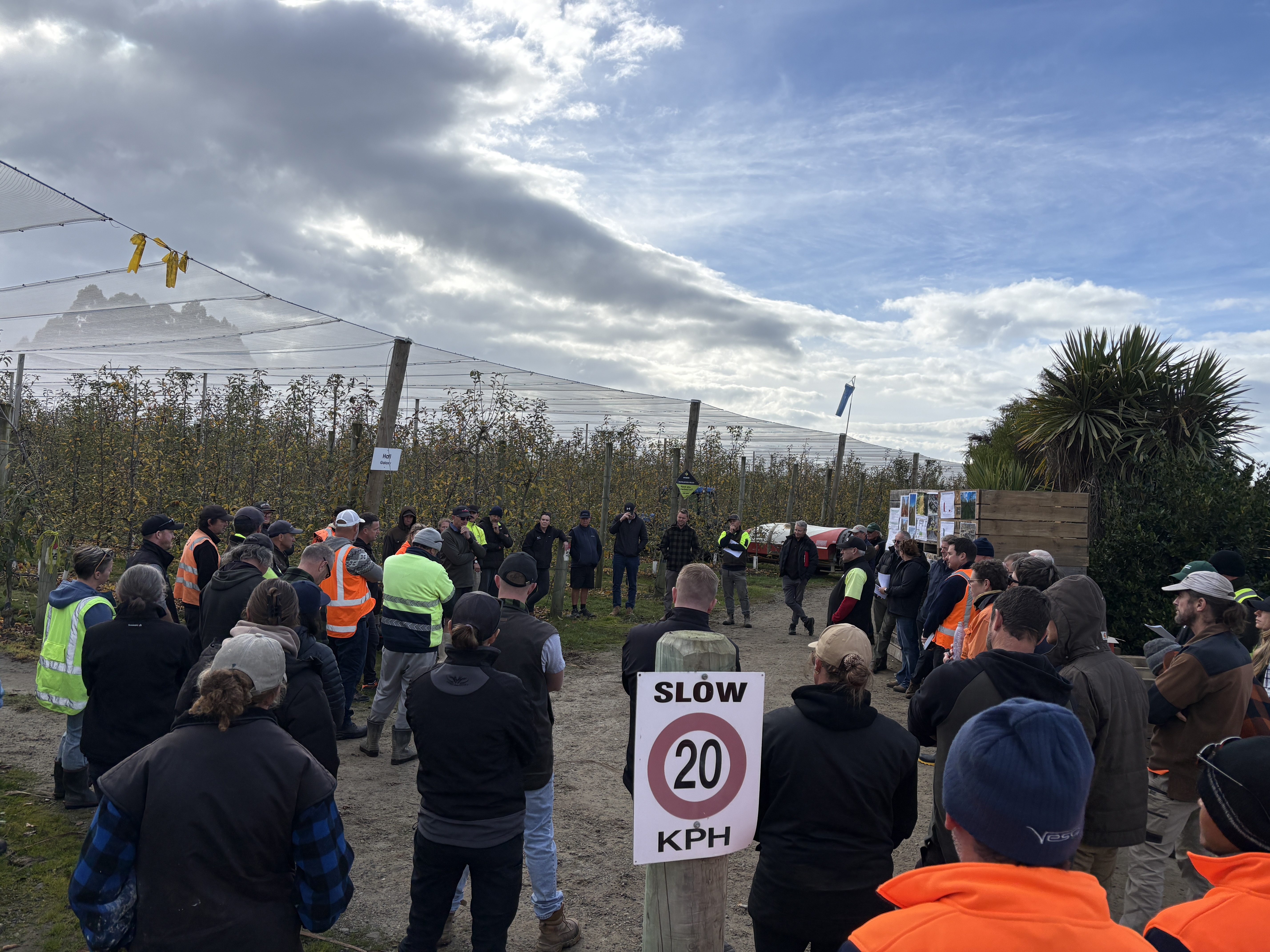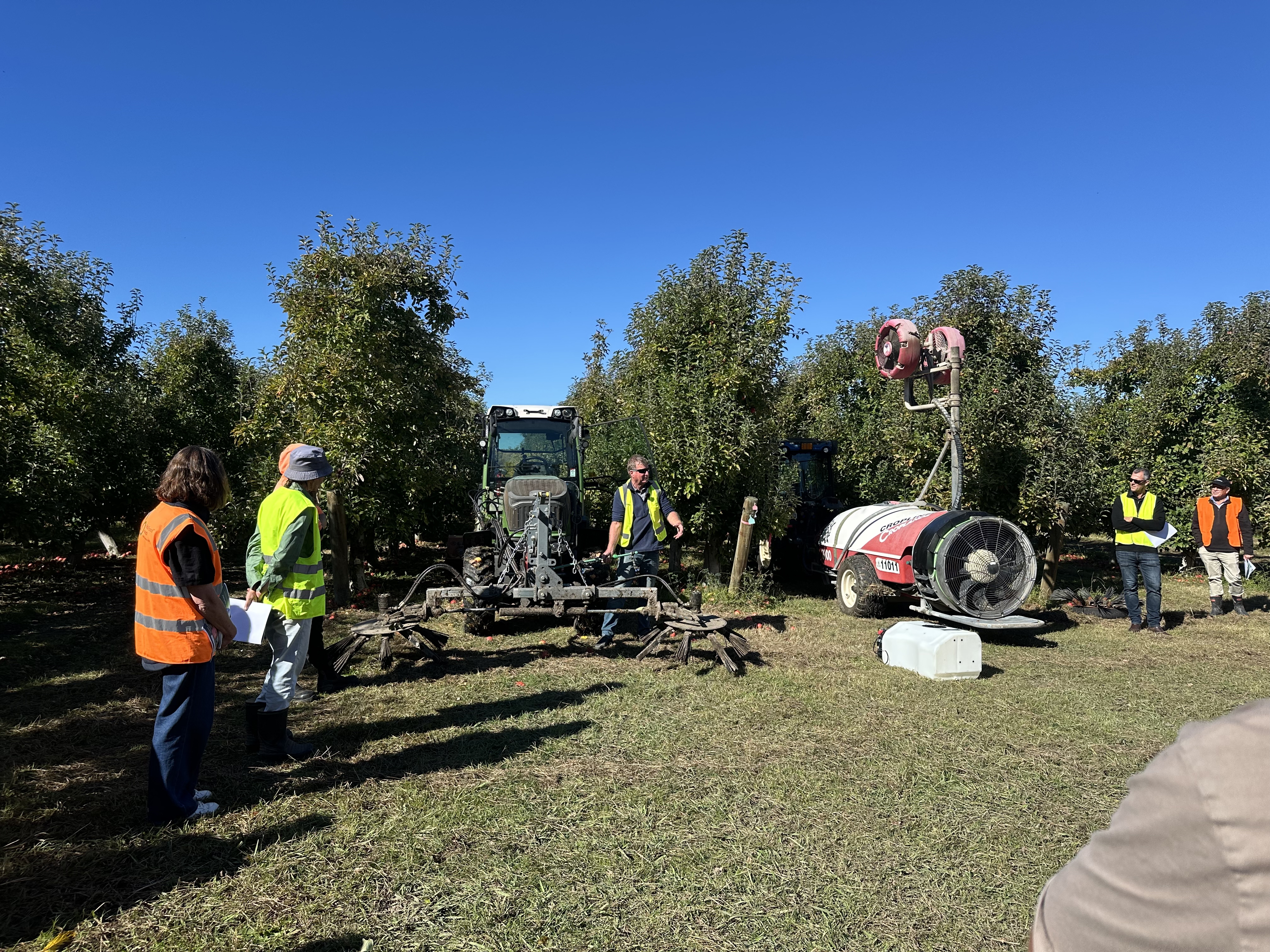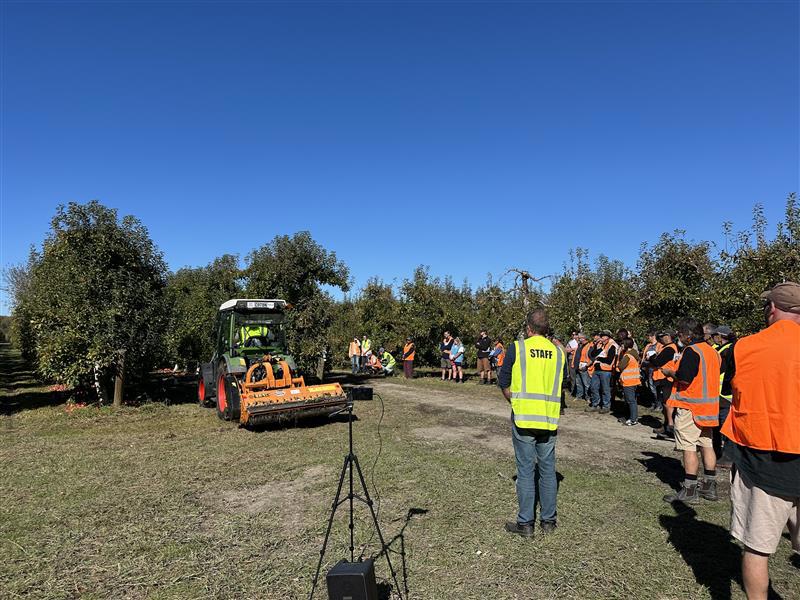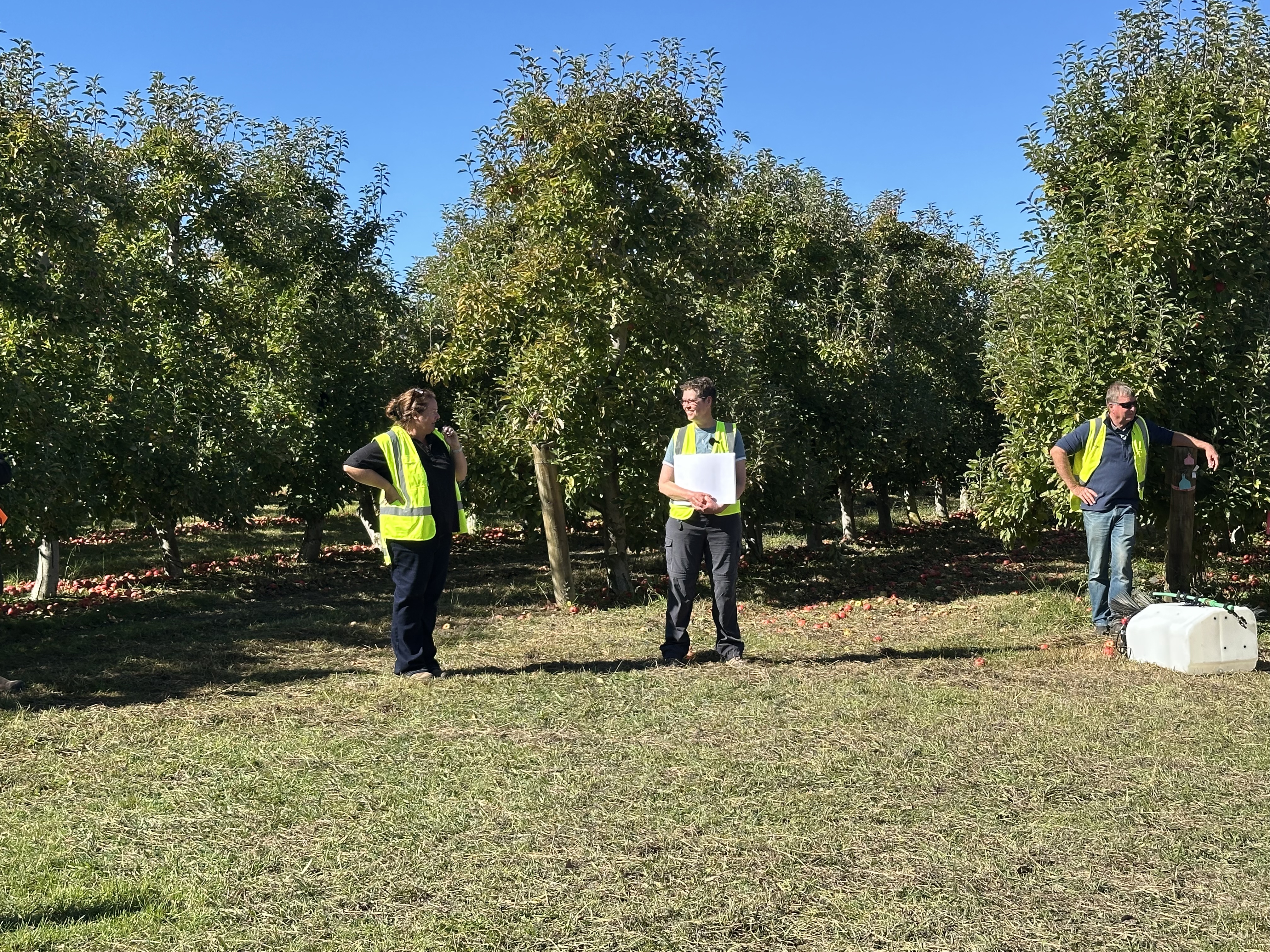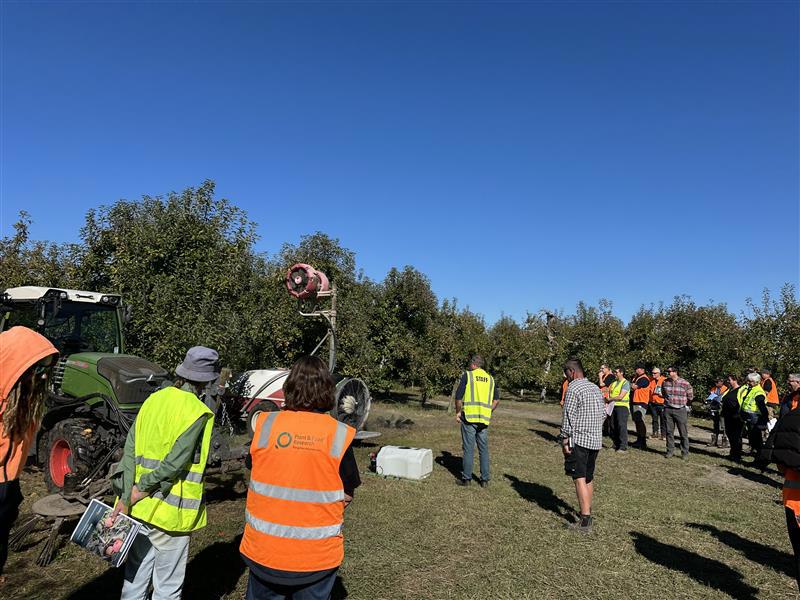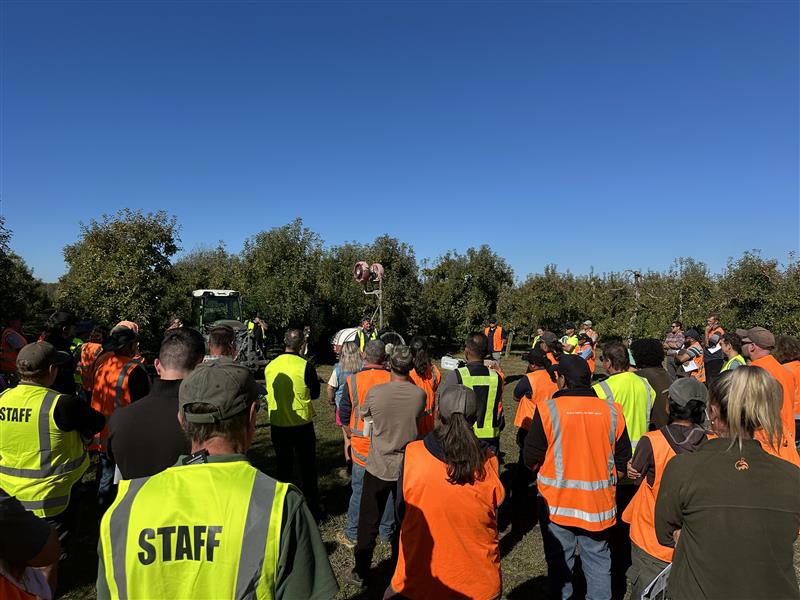
Held in Hawke’s Bay on Wednesday 29 April at Mr Apple’s Clive River Block, and in Tasman on Thursday 21 May at Thomas Bros Ltd in Riwaka, the NZAPI field days brought together growers, advisors and researchers to share the latest insights from the Smart & Sustainable Research Programme.
Both field days focused on how an integrated approach to blackspot management can deliver meaningful reductions in disease pressure on orchard.
Attendance at both events was high, with growers keen to hear from both the growers who implemented the approach, as part of NZAPI’s Smart & Sustainable case study orchards, and the scientists behind the Smart & Sustainable research itself.
Presentations emphasised how monitoring disease levels and implementing a suite of orchard practices, including orchard floor sanitation, forced ascospore release, and risk-based spray programmes helped manage disease in both the short and long term.
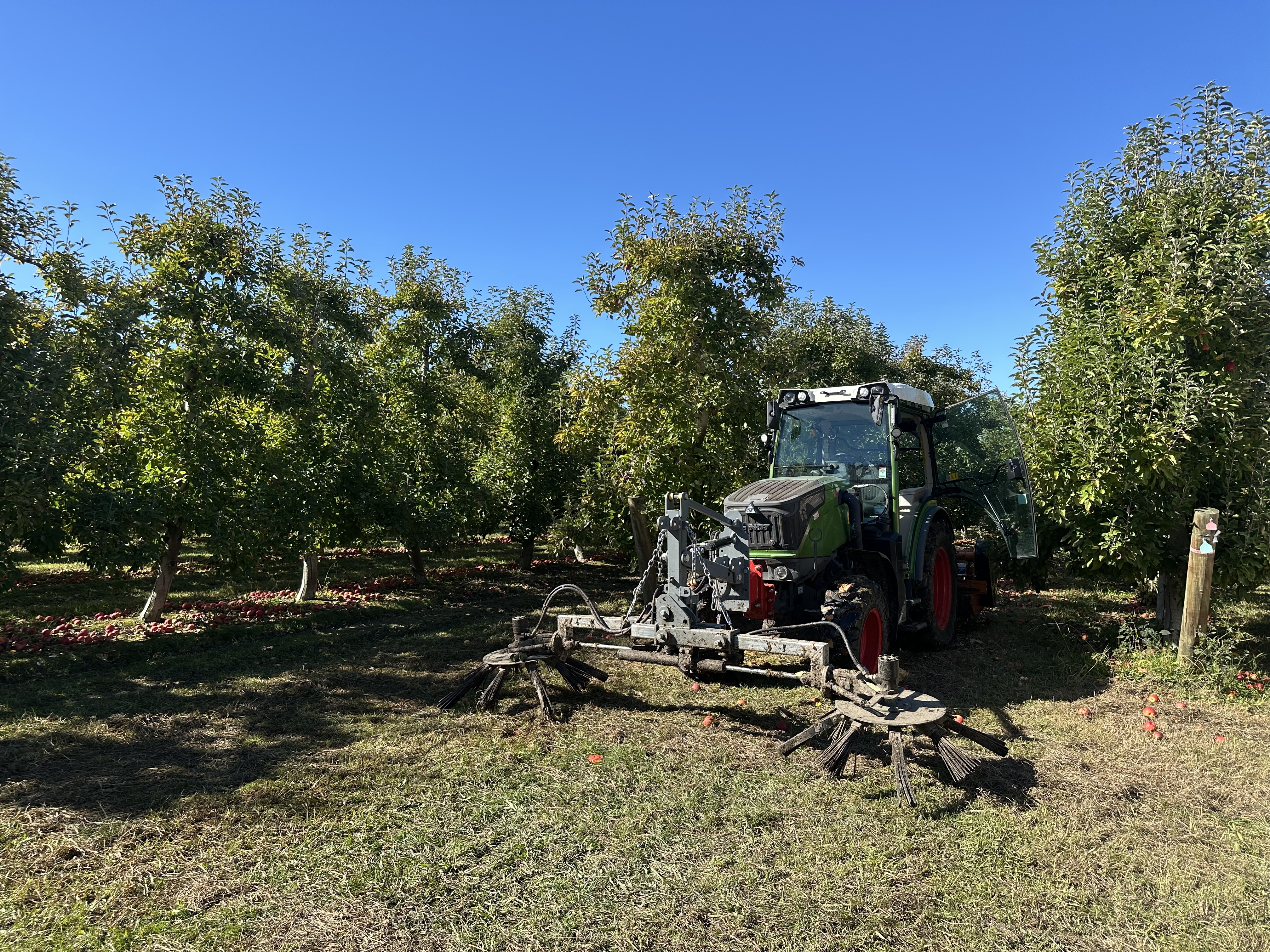
The field days had a very practical, hands-on approach, focusing on actionable takeaways, with orchard floor sanitation a central theme. Presenters shared practical information on getting the most out of sweeper equipment, selecting suitable mulcher setups, the practical application of urea, and the importance of timing these activities to maximise their impact.
Forced ascospore release strategies were another focus, with presentations outlining how forced ascospore release can be used as practical tool to reduce blackspot pressure during the primary infection period. Growers heard how integrating these strategies with wider sanitation and spray programmes can help reduce overall disease load.
Grower case studies demonstrated how blocks with historically high blackspot pressure could be turned around through consistent, targeted sanitation practices. These real-world examples were invaluable for reinforcing the impact that integrated sanitation practices can have over a relatively short period of time.
The Tasman field day also included a canker success story, with discussion on how canker levels have been turned around in a previously highly infected orchard block, through continued regular effort, identification and pruning. Growers also highlighted areas for NZAPI to explore as part of its research programme.
NZAPI would like to extend a special thanks to speakers, including:
In Hawke’s Bay: Mark Wakefield (Mr Apple), Karim Brown (Bostock), David Manktelow (Applied Research & Technologies), Jack Hughes (Fruition), and Reiny Scheper (Bioeconomy Science Institute).
In Tasman: Mark Thomas (Thomas Bros Ltd), Duncan Cederman (Cederman Brothers Ltd), Erica Henare (Kono), Mike Nelson and Greg Drydon (Fruition), and Reiny Scheper and Rebecca Campbell (Bioeconomy Science Institute).
With strong turnout and high engagement at both events, the field days have built momentum around integrated blackspot management and supported growers to make informed decisions and improve orchard outcomes ahead of the 2026/27 season.